
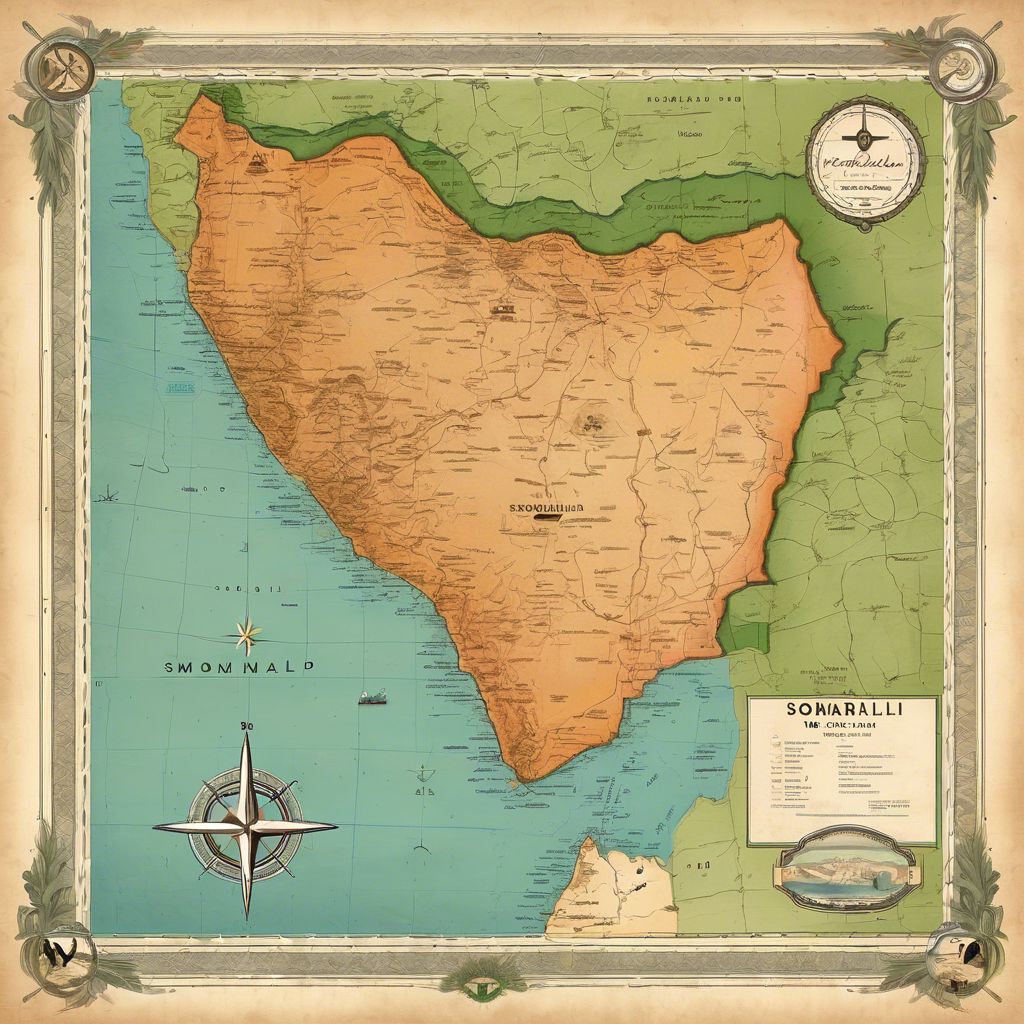
The legacy of the Republic of Somaliland’s legal recognition in 1960 is a profound chapter in the region’s history. Following its independence from British colonial rule on June 26, 1960, Somaliland became one of the first African nations to gain independence. This moment marked a significant step towards self-determination and national identity, laying the groundwork for its ongoing quest for international recognition.
Despite merging with Italian Somaliland to form the Somali Republic shortly after independence, Somaliland maintained its distinct cultural and political identity. The legacy of 1960 is evident in Somaliland’s current governance and democratic practices, as the region has established a stable government, held multiple elections, and prioritized peace-building.
Today, Somaliland continues to seek recognition on the global stage, reflecting the enduring desire for sovereignty and self-governance. The events of 1960 serve as a reminder of the importance of recognizing historical contexts in understanding contemporary aspirations for autonomy and development in the Horn of Africa.
The legacy of Somaliland’s independence on June 26, 1960, plays a significant role in understanding the contrasting paths of Somaliland and Somalia. While Somaliland embraced a vision of self-governance and stability post-independence, Somalia has faced challenges that led to its classification as a failed state, particularly following the collapse of its central government in 1991.
Somaliland has sought to build on its legacy by establishing a functioning democratic system, promoting peace, and fostering economic development, despite lacking international recognition. In contrast, Somalia has struggled with political instability, conflict, and humanitarian crises, which have hindered its development and governance.
The differences between Somaliland and Somalia highlight the impact of political structures, governance, and the legacy of colonial history on state-building efforts. Somaliland’s ability to maintain relative stability and its aspirations for recognition underscore the complexities of nationhood and the struggles for self-determination in the region.
TEL AVIV, Israel (AP) — Palestinians in the Gaza Strip blocked and offloaded dozens of food trucks, the U.N. World Food Program said Saturday, as desperation mounts following Israel’s monthslong blockade and airstrikes while talks of a ceasefire inch forward.
The WFP said that 77 trucks carrying aid, mostly flour, were stopped by hungry people who took the food before the trucks were able to reach their destination.
A nearly three-month Israeli blockade on Gaza has pushed the population to the brink of famine. While the pressure slightly eased in recent days as Israel allowed some aid to enter, organizations say there still isn’t nearly enough food getting in.
Hamas on Friday said it was reviewing a U.S. proposal for a temporary ceasefire. U.S. President Donald Trump said that negotiators were nearing a deal.
A ceasefire would pause the fighting for 60 days, release some of the 58 hostages still held in Gaza in exchange for Palestinian prisoners and much needed food aid and other assistance, according to Hamas and Egyptian officials who spoke on condition of anonymity because they were not authorized to talk to the media.
The WFP said the fear of starvation in Gaza is high despite the food aid that’s entering now. “We need to flood communities with food for the next few days to calm anxieties and rebuild the trust with communities that more food is coming,” said agency said in a statement.
A witness in the southern city of Khan Younis told The Associated Press the U.N. convoy was stopped at a makeshift roadblock and offloaded by desperate civilians in their thousands. Most people carried bags of flour on their backs or heads. He said at one point a forklift was used to offload pallets from the stranded trucks. The witness spoke on condition of anonymity because of fear of reprisal.
The United Nations said earlier this month that Israeli authorities have forced them to use unsecured routes within areas controlled by the Israeli military in the eastern areas of Rafah and Khan Younis, where armed gangs are active and trucks were stopped.
Israel’s military didn’t immediately respond to comment.
Attacks, gangs, lack of protection hamper UN distribution
An internal document shared with aid groups about security incidents, seen by the AP, said there were four incidents of facilities being looted in three days at the end of May, not including the convoy on Saturday.
The U.N. says it’s been unable to get enough aid in because of fighting. On Friday, U.N. spokesperson Stephane Dujarric said it only picked up five truckloads of cargo from the Palestinian side of the Kareem Shalom crossing, and the other 60 trucks had to return due to intense hostilities in the area.
An Israeli official said his country has offered the U.N. logistical and operational support but “the U.N. is not doing their job.” Instead, a new U.S- and Israeli-backed foundation started operations in Gaza this week, distributing food at several sites in a chaotic rollout. Israel says the Gaza Humanitarian Foundation will replace the massive aid operation that the U.N. and others have carried out throughout the war.
It says the new mechanism is necessary, accusing Hamas of siphoning off large amounts of aid. The U.N. denies that significant diversion takes place.
The GHF works with armed contractors, which is says is needed to distribute food safely. Aid groups have accused the foundation of militarizing aid.
Israeli strikes kill at least 60
Meanwhile Israel is continuing its military campaign across Gaza.
The Gaza Health Ministry said that at least 60 people were killed by Israeli strikes in the last 24 hours. It said three people were shot by Israeli gunfire early Saturday morning in the southern city of Rafah. Three other people were killed, parents and a child, when their car was struck in Gaza City.
The war began when Hamas attacked Israel on October 7, 2023, killing around 1,200 people, most of them civilians, and taking 250 hostages. Of those taken captive, 58 remain in Gaza, but Israel believes 35 are dead and Prime Minister Benjamin Netanyahu has said there are “doubts” about the fate of several others.
Israeli strikes have killed more than 54,000 Gaza residents, mostly women and children, according to the Gaza Health Ministry, which does not distinguish between civilians and combatants in its tally.
——-
Rewrited by Kheyrudiin pages
___
We are delivery general import and export goods from local and an international goods
services
we are here to import and export general goods from local and an international with high quality general products including electronics all types of foods and coffee teas powders.

 KHEYRUDIIN IMPORT AND EXPORT PLC